


Transportation Policy Is Health Policy
I don’t have an easy way to get to my appointment, and I need a new IUD.
I heard some version of that from patients in the early months of the COVID-19 pandemic when I was working on reproductive health care access. Cities essentially shut down, no one was sure whether people could or should travel, and many patients were looking for ways to get themselves to the clinic with the least amount of exposure. A trip to the clinic, which should have been the simplest part of getting care, had become a logistical problem with a public health consequence.
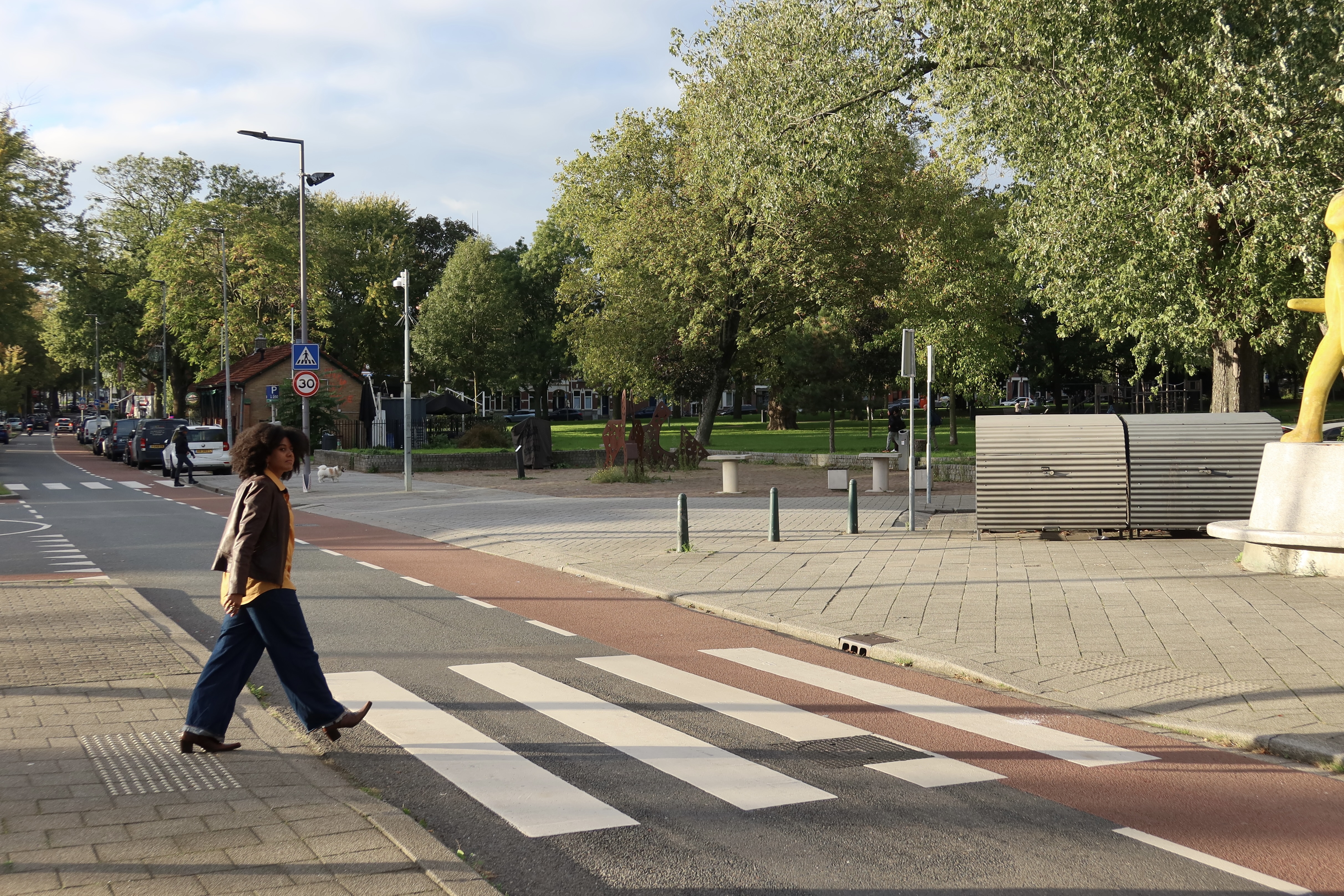
Those early months are what cemented my relationship to mobility. I started getting around more on foot, by bike share, and on short bus rides. During my travels, I began noticing what I hadn’t before: intersections with no crosswalks, bike routes without enough bike lanes, and perilous connections to transit stops. The barrier between my patients and their care wasn’t a patient problem. It was a street design problem.
That’s the idea at the heart of my work: transportation agencies are already making public health decisions every day, in how they scope projects, run benefit-cost analyses, and rank safety investments. Most just don’t see them as health decisions. This post covers why the two fields so often work apart, what’s already working in places like Minnesota, Barcelona, and New York, and four practical places to start.
Two Frameworks, One Idea
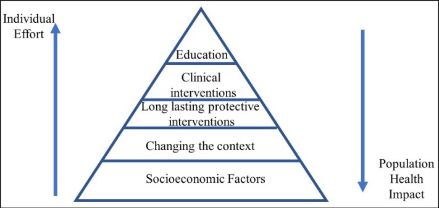
Public health practitioners use a framework known as the Health Impact Pyramid to sort interventions by individual effort and reach. At the top of the pyramid are interventions that depend the most on individual effort – think PR or health campaigns – which reach fewer people. At the bottom are changes to the conditions in which people live, which reach everyone at once.
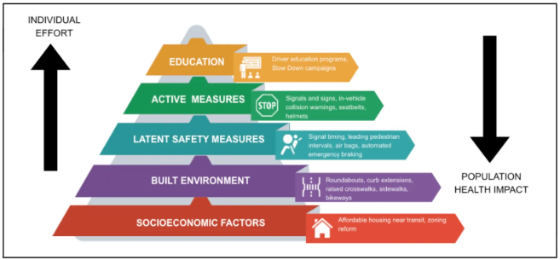
Road safety has its own version. Dr. David Ederer and colleagues adapted the pyramid into the Safe System Pyramid. The Safe System Approach is the framework that underpins Vision Zero, a strategy to eliminate deaths and severe injuries. Within this framework, a speeding campaign or a ticket relies on individual choices and has limited reach. Meanwhile, redesigning streets in ways that separate people driving from people walking and biking, and calming traffic to proactively slow speeds protects everyone. In public health spaces you’ll often hear that practitioners have to work in ways that make the healthy choice the easiest choice, regardless of education, income, service provision, or other societal factors. Road safety is equally interested in making the safest choice the easiest choice via the Safe System Approach.
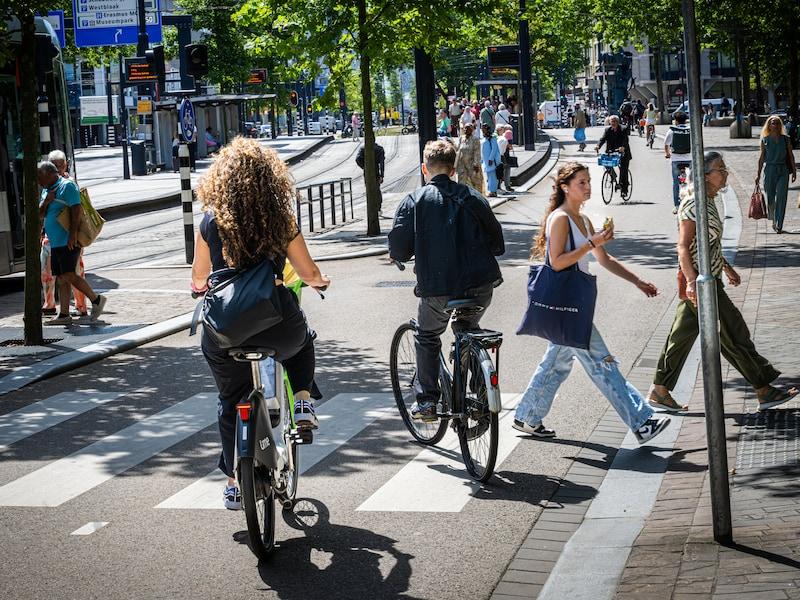
But the benefits of a Safe System go beyond crash prevention. Safe streets make walking and biking real options and reliable transit gives people an alternative to driving. However, transit only works as a health investment if people can reach it safely, which means safe crossings, sidewalks, and bikeways at and around stops. Together these mobility options and safe routes can lower the risk of inactivity-related diseases such as heart disease, diabetes, and stroke. Fewer car trips also mean cleaner air, which matters most for people living near busy roads. It also means better access to jobs, health care, and healthy food.
A Divide That Does Not Have to Exist
If the frameworks align, then why the separation? It seems that the reasons are structural. Transportation and health agencies run on separate funding streams. Transportation performance metrics have historically monitored vehicle throughput, not injuries or illness. And health departments often lack a formal seat in project review, so the people who see the consequences rarely see the plans. Some places are already bridging the gap such as:
- Minnesota: The Departments of Transportation and Health have partnered for years on health impact assessments and Minnesota Walks, which was one of the first statewide pedestrian plans to treat health and walking as planning priorities.
- Barcelona: Researchers worked with the city’s health agency to measure the health impact of its Superblocks plan, which closes inner streets in groups of city blocks to through traffic. Researchers estimated that full buildout could prevent 667 premature deaths a year, mostly from cleaner air.
- New York City: A study in the American Journal of Public Health found that Vision Zero in New York saved $90 million in healthcare costs over five years, with 77.5 fewer traffic-related injuries per 100,000 person-years in the areas studied, specifically in areas where there were higher concentrations of low-income residents and residents of color.
Who Bears the Burden
Both health and traffic safety outcomes fall unevenly. People in low income U.S. neighborhoods are 35% more likely to be killed while walking. Census tracts earning under $50,000 a year account for 30% of pedestrian deaths while making up just 17% of the population. Black people are killed while walking at more than twice the rate of white people, and Indigenous people at more than four times the rate.
And these numbers are not random. They are the result of policy choices. Redlining policies in the US starved Black neighborhoods of investment , and highway expansion projects of the 1950s routed roads through communities where land was cheapest and political resistance weakest. Many of those communities still live with high speed roads, missing sidewalks and bikeways, and poor lighting.
This pattern is also observed globally. According to the World Health Organization, 92% of the world’s road deaths happen in low and middle income countries, and the risk of dying is more than three times higher in low income countries than in high income ones.
What Integrating Health and Transportation Looks Like
Public Health as a name for this: Health in All Policies, an approach that builds health considerations into decisions in every sector, including transportation, housing, and education. And the good news is that many of these approaches don’t require waiting for a new law or a brand-new program to be put into action. Here are four places to start:
- Putting health in project reviews. Require health impact assessments for transportation projects, and give health staff a role from the start, not a comment period at the end. Minnesota has done this for years. In Clackamas County, Oregon, a public health analyst holds a shared health and transportation role, and the health department has played a role in shaping corridor projects. Where to start: Transportation leaders can invite health staff into project scoping and both can look for shared funding.
- Factor health into your math. Benefit-cost analysis decides which projects move forward, so what it measures matters. Include injuries, illness, and healthcare costs alongside travel time and vehicle delay. Where to start: Agency analysts can add health costs to evaluation methods, and decision makers can ask for them.
- Connect & layer the data. Police-collected crash data is commonly used in safety analysis but can undercount incidents for vulnerable road users in low-income or communities of color. Hospital and insurance records can share additional data on who was hurt, how badly, and what it cost. Health departments can also give transportation departments injury data. Where to start: A transportation data team and a health epidemiologist can begin with a data-sharing agreement and one shared question, such as which neighborhoods see the most serious injuries.
- Invest where the disproportionate burden is. Crash clusters show where crashes happen most often, but they don’t show where fatalities are happening and who carries a disproportionate share. When you pair crash data with health and equity analysis you’ll be able to prioritize funding for the neighborhoods with the highest burden. See this example from Nashville. Where to start: Safety action plan teams can add health equity measures to how they rank projects, and elected officials can shape how budgets reflect them.
Every community will build this differently, and that’s fine. The most important thing is to keep the conversations going. When we design streets for safety with the full picture, we also make room to reimagine our futures with activity, clean air, and access to all of our critical destinations. Transportation policy is health policy. It is time we planned like it.
Already making these decisions? Let’s make them on purpose.
Every project review, benefit-cost analysis, and safety action plan carries public health consequences, whether or not anyone names them. I help transportation and planning teams see those decisions and make them well, from reviewing safety action plans to training staff on public health for transportation professionals. If you’re not sure where health already shows up in your pipeline, let's chat.