Health in All Policies: What is it and why should transportation practitioners care?
If you work in transportation, you probably describe your job as working to move people safely. Public health practitioners often describe theirs as working to keep populations healthy. Those may sound like different jobs, but they’re closer in scope than they seem.
It’s common knowledge that public health is in the business of prevention. But so is transportation, though it’s less often described that way. Every decision about the built environment shapes how and where people live, move, play, and make everyday choices about their health. Street design, transit access, neighborhood development, land use, zoning, and more play a role. Whether or not it’s part of your job description, your work already influences community well-being, life expectancy, and health equity.
However, there is an opportunity to do so intentionally.
Adopting a Health in All Policies (HiAP) framework is one way to start.
What Is Health in All Policies (HiAP)?
The World Health Organization defines HiAP as “an approach to public policies across sectors that systematically takes into account the health implications of decisions, seeks synergies, and avoids harmful health impacts in order to improve population health and health equity.”
It’s not a new idea; it’s been around since the 1970s and was built on decades of successful intersectoral collaboration. What sets it apart is that it is a governance framework that puts health at the center of government decision-making, across all sectors. For transportation professionals – myself included – it's the missing piece that transforms how we see our work: we’re not just moving people; we’re shaping the conditions for healthy and equitable communities.
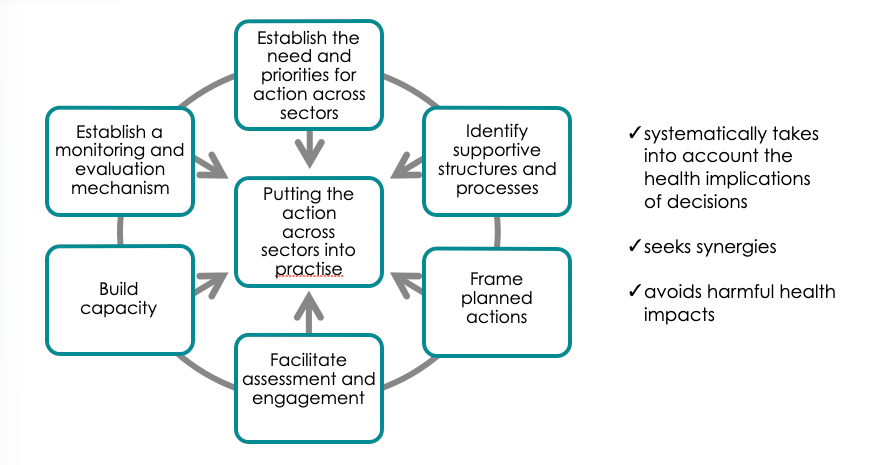
The framework is perfectly simple in concept but vast in scope: Decision-makers across transportation, planning, housing, labor, and more make informed choices about the health, equity, and environmental consequences of their policies and subsequent programs. HiAP demands both collaboration and accountability.
Health is Built, Not Delivered
Here’s the thing: Clinical care - the doctor's visit, the hospital bed, the prescription – is an immensely important piece of population health, but only accounts for about 10-20% of health outcomes and longevity.
Genetics and individual behavior of course play a role, but the conditions in which people live, work, move, and play often matter just as much or more. These conditions, also known as social determinants of health, shape whether people live into their 70s or into their 90s, whether they can manage chronic disease or fall prey to preventable ones, and whether they're exposed to violence or able to thrive in safe and healthy places.
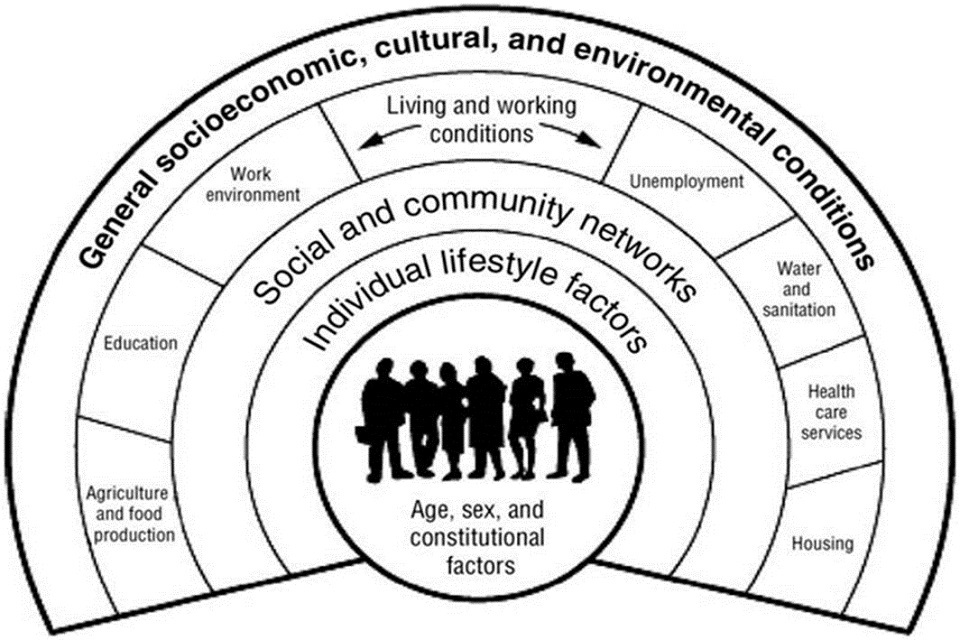
Transportation professionals have more influence over these determinants than they realize because their decisions shape the environments in which people live.
Research shows that neighborhood characteristics can influence an individual’s ability to adopt healthy behaviors, and that individual-level campaigns work best when the environment supports them. Public health messaging about physical activity or healthy eating falls flat in communities where the environment makes those choices nearly impossible. For instance:
- Low-income neighborhoods and neighborhoods of color tend to have smaller, more crowded parks and less green space, which means less safe places to play or walk.
- Low-income neighborhoods often have less access to supermarkets and healthy food and more access to fast-food outlets.
- Low-income neighborhoods and historically black neighborhoods have a higher density of liquor outlets which is associated with higher rates of violent crime or interpersonal violence.
- Low-income communities and communities of color are more likely to live near high-traffic roadways, where they are exposured to more air pollution which is linked to higher rates of childhood asthma.
Look closely at that list and a pattern emerges: many of these conditions trace back to decisions about land use, zoning, and who can get where. Transportation is one lever among several, but it’s a powerful one.
Then there are the streets themselves. These same neighborhoods also tend to lack safety-centered infrastructure that makes it easy and comfortable to get around: limited crosswalks and connected sidewalks; fewer functioning street lights; fewer bikeways; and limited traffic calming and other basic safety features (source).
The result? Census tracts earning under $50,000 a year account for 30% of pedestrian deaths while making up just 17% of the population. Black people are killed while walking at more than twice the rate of white people, and Indigenous people at more than four times the rate. And residents of high-poverty neighborhoods can live up to 14 years shorter than those in affluent areas.
When taken altogether, these are not separate problems. In many places, the same neighborhoods face limited green space, limited food access, high speed roadways, and unsafe streets, each of which compounds the others. Transportation is where many of them meet. It determines whether a child can walk safely to school or to a park, whether a family can reach a grocery store without a car, and whether a highway runs through the middle of a neighborhood.
But no single agency controls all of these conditions. Transportation shapes streets, planning and zoning influence land use, housing and economic development shape who can afford what, and public health assesses the outcomes. Each holds one element and harm falls the hardest where those elements are not accounted for collectively.
HiAP gives practitioners a way to address these conditions together, rather than leaving them to any one sector.
HiAP in Practice
Several places have already built that thinking into how they plan, measure, and govern, and transportation is often where it shows up most clearly such as:
- London: In 2017, London employed a Healthy Streets approach. Developed by a public health specialist working inside Transport for London, it evaluates streets against ten indicators of what makes them healthy and welcoming including elements like clean air, low noise, and places to rest. Boroughs must adopt it to receive funding for implementation. This is HiAP in action: health expertise sits inside the transportation agency, and health criteria determine which projects get funded.
- Wales: The Well-being of Future Generations Act 2015 requires public agencies to set well-being objectives that contribute to seven national goals, including “a healthier Wales” and “a more equal Wales.” In 2024, Transport for Wales was added to the list of agencies that must set well-being objectives that contribute to healthier and more equal Wales. This is HiAP in action: health is an institutionalized responsibility of a transportation agency, not just a goal it can choose to pursue.
- California: The state’s Health in All Policies Task Force was created in 2010 and brings together state agencies, including transportation agencies, to build shared goals for what health looks like in each community. Those goals include safe, active transportation to school, work, and essential destinations; access to parks and green space, healthy food; access to safe and affordable housing, and community safety through violence prevention. The state’s Active Transportation Action Plan had members help shape Caltrans’s long-range California Transportation Plan with a focus on health and equity. This is HiAP in action: transportation is just one of several sectors working together intentionally and early to advance shared health goals.
None of these places treat health as a separate project. Instead, they are intentional about where health shows up in existing processes: planning requirements, project evaluation, and cross-agency goals.
Putting Health in All Policies into Action
Today's systems of prevention are fragmented. They have been designed to keep responsibilities separate: roadway safety falls almost exclusively to planning and engineering, while health prevention falls to public health. But the work of both spans the same ground of planning, land use, transit, design, policy, and health.
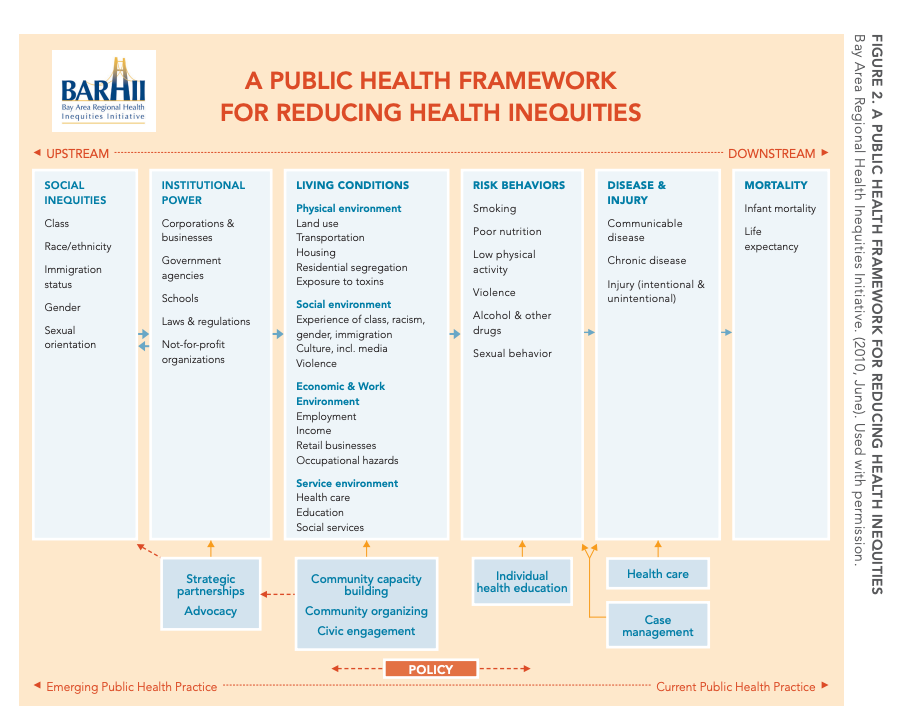
The truth is that no single sector owns prevention or safety. Transportation professionals, planners, engineers, community members and more all hold a critical piece of the puzzle and advancing both requires working together.
While HiAP may sound like one more thing to do on an already full plate, it can make existing work easier to fund, defend, and deliver. Health evidence strengthens project cases: Health-informed project selection is increasingly a competitive advantage. Hospital and EMS data fill gaps in police crash reports, giving practitioners a more robust picture of where harm is happening. And health departments bring community relationships, expertise, and sometimes funding that can extend day to day capacity without additional setup.
Here are a few starting points for putting an HiAP approach into practice:
- Apply a health lens early in the planning process. HiAP works best when health is considered while an idea is still a draft, not after the design is set. This goes for policymaking, action plans, or safety projects. Health Impact Assessments (HIAs) are a common tool for weighing a policy’s likely health effects so alternatives can be compared before decisions are final. Where to start: Add a short health screening step to project scoping or plan updates and invite relevant health staff to it. If a full HIA is too much of a lift, check out quicker tools like the legislative health notes piloted by Johns Hopkins University School of Public Health.
- Integrate data from your health department and local hospitals. Mapping where fatalities and serious injuries happen is a standard practice in Vision Zero. However, this is just a start as these maps are often developed with police-reported crash data. However, studies have shown that police crash data can undercount injuries, particularly for people walking and biking as half of all pedestrian and bicyclist crashes are underreported to the police. Injury data is also not equitably distributed across racial and economic lines. Hospital admission rates are higher and police-reported crash rates lower for Black and Hispanic people than for white people. Pairing hospital and trauma data gives you a clearer picture of the real toll on your streets. Where to start: Form a small cross-agency team, sign a data-sharing agreement, and pick one shared question, like which neighborhoods see the most serious injuries. For instance, Lancaster, Pennsylvania’s Vision Zero Action Plan includes actions to form a Crash Analysis Team across departments and is working with their hospital system to link crash data to EMS, hospital, and trauma registry data.
- Put health equity into project ranking. Crash clusters show where crashes happen, but not who carries a disproportionate burden. Pairing crash data with health and equity analysis lets regions direct funding to the highest-burden neighborhoods. The City of Oakland includes health, safety, and equity in its prioritization criteria. Where to start: Add a health equity measure to your safety plan or regional scoring criteria. This is where Metropolitan Planning Organizations (MPOs) and regional agencies can take a leadership role.
- Broaden analysis to include transportation access. Consider collecting data on access to clinics, parks, grocery stores, and other health-promoting destinations. Research shows residents of rural areas and low-income neighborhoods are more likely to lack access to supermarkets and healthful food, so a transit or active transportation connection to a grocery store can improve nutrition, not just mobility. Where to start: Map one health-promoting destination type against your network and look for the gaps. The Sacramento Area Council of Governments (SACOG) demonstrates this approach in action, revamping its project selection process to prioritize investments that improve access to health-promoting destinations. This is another place where MPOs can take a leadership role.
- Leverage health department relationships to bolster community data. Planners and transportation agencies haven’t always had the strongest track record on community engagement, while public health often has trusted formal and informal relationships. For instance, Denver bridges this gap via their Community Active Living Coalition (CALC) programs that hire local champions to deploy micro-grants directly to neighborhood active transportation infrastructure or community-driven priorities around health and the built environment. Where to start: Ask your health department which community partners they already work with and see if there are opportunities to leverage those relationships to engage community members.
- Measure what keeps people alive. Traditional transportation metrics like Level of service (LOS) measure travel time and delay. While important for traffic flow, it is irrelevant to the survivability of crashes. In contrast, vehicle operating speed can be used to predict survival. When a person is hit by a vehicle traveling at 20 mph, they have a 95% chance of survival. At 40 mph, that drops to 15%. Using operating speed to assess the safety risk of intersections, corridors, and street networks aligns your performance measures with a health outcome. Where to start: Pilot operating speed as a performance measure on one corridor or include it in your next safety plan. Report it alongside LOS so that decision-makers can see both mobility and survival in the same conversation.
But don’t limit HiAP efforts to the health sector alone. HiAP is cross-sector by nature, and several relationships are worth cultivating:
- Land use and development: Explore how zoning and comprehensive development plans can encourage housing near transit to make walking, biking, and public transit more accessible and convenient (all of which support better health outcomes).
- Criminal justice and planning: Safety and enforcement decisions shape who feels protected on the street. Share evidence-based strategies for crime prevention through environmental design and roadway safety. Consider how traffic enforcement practices can create equity risks and consume significant public resources, particularly when traffic stops are used for broader crime prevention rather than focused on roadway safety. Research links higher densities of alcohol outlets to more violent crime, underscoring the role retail patterns and land use play in community safety and health.
- School District: See if there are opportunities for your transportation department and school district to work together on efforts that support physical activity and safe routes to school. See this guide from the Safe Routes to School National Partnership.
Of course, there are so many ways to get started, but you don’t have to do it all at once. Just start where you are. This can be simply starting a conversation with someone in your health department who works on active transportation, nutrition, or physical activity or sharing this blog with a fellow transportation colleague.
Transportation Professionals Are Public Health Practitioners
They are public health practitioners, whether or not its listed in their job description. Every corridor planned, every project ranked, and every performance measure chosen is a chance to advance public health.
That’s a lot of influence, but it’s also a huge opportunity. You don’t need to establish a brand new department or a bigger budget to begin. You can start with one conversation, one shared data set, or one new metric.
Communities are counting on us to cultivate safe, healthy streets. The good news is that we’re already in a position to do so.